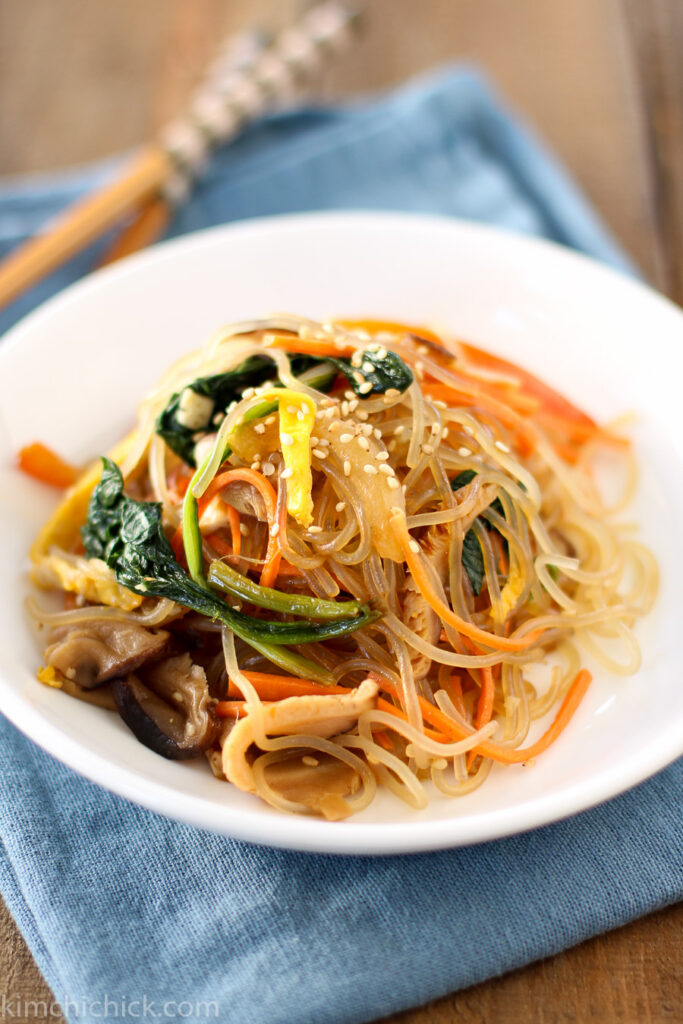
Japchae is a classic and versatile Korean stir-fry dish combining noodles, veggies, and egg, all tossed in a sweet soy dressing.
What is Japchae?
Japchae (sounds like chop chay) is a classic Korean dish combining noodles, veggies, and eggs tossed in a sweet sesame soy dressing. This Japchae recipe is fairly traditional and contains lots of veggies like peppers, carrots, onions, mushrooms, and spinach. Yum!
Japchae is packed with so many delicious vegetables, but to me, the noodles are definitely the star! Japchae typically uses glassy, semi-translucent noodles made from sweet potato starch, which gives the noodles a satisfyingly springy, chewy texture, and helps them to stand up to the surrounding ingredients.
As a kid, I remember eating Japchae at family gatherings and special occasions like weddings, banquets, and birthdays. While it’s rare for me to eat Japchae at home today, you’ll likely find it on the menu at any Korean restaurant. Japchae usually isn’t the sole entree, but instead it’s served as a side dish or on a communal plate so everyone can share.
How to make Japchae:
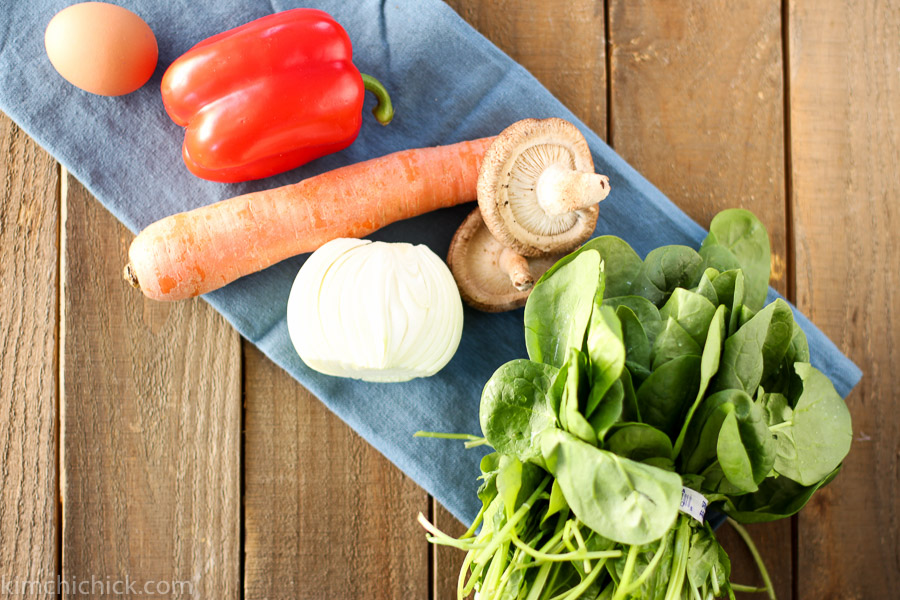
I keep my Japchae vegetarian, but it’s more common to find seasoned beef in the mix as well. So, if you’re craving a protein boost, add strips of cooked rib eye or sirloin into the dish and combine.
Cooking each ingredient separately takes a little extra time, but it’s well worth it to not end up with mushy veggies. Most of the vegetables found in this Japchae recipe can also be found in my Bibimbap recipe. So, put those leftover vegetables to good use!
1. Prepare and cook the vegetables
Red Bell Pepper
Rinse, core, and thinly slice the pepper into strips. Heat 1 Tbsp of cooking oil in the skillet and toss the peppers for one minute. Then, take off heat and set aside.

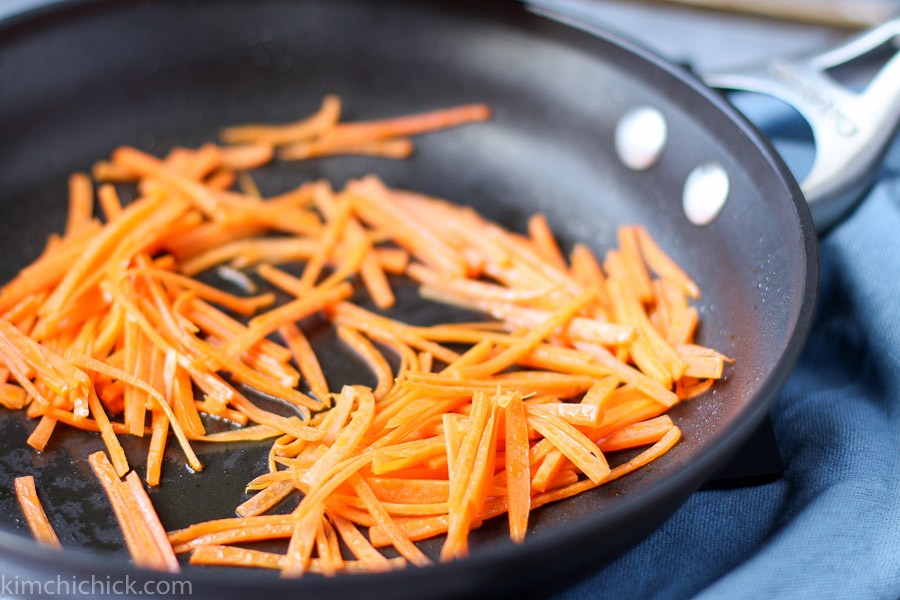
Carrots
Julienne the carrots into thin matchsticks. Heat 1 Tbsp of cooking oil in a skillet, add the carrots and a pinch of salt and sautée for one minute. Then, take off heat and set aside.
Onions
Cut an onion in half and slice thin. Saute for 2 minutes in cooking oil until translucent and soft. Then, take off heat and set aside.
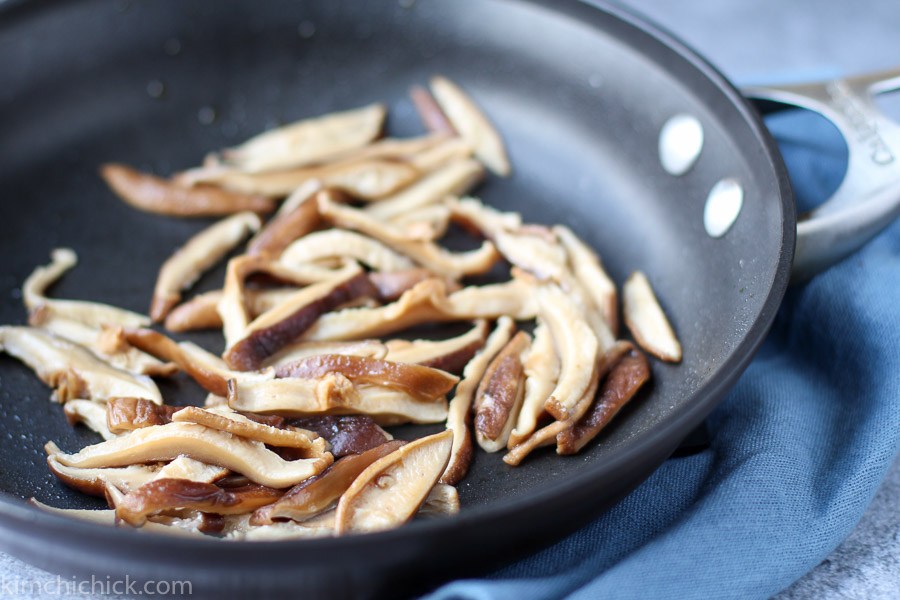
Shiitake Mushrooms
I always have dried shiitake mushrooms on hand, so if you’re the same, then rehydrate in cold water for 20-30 minutes before using. Otherwise, slice fresh shiitake mushrooms and add 1 Tbsp of the soy sesame dressing. Next, heat 1 Tbsp of cooking oil and cook for 2 minutes until it softens. Then, take off heat and set aside.
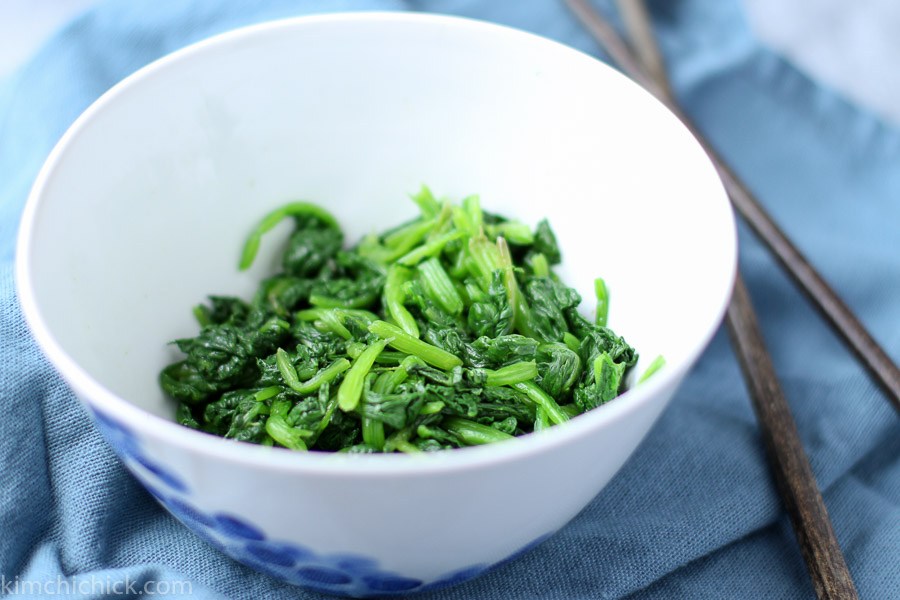
Spinach
Take a bundle of stemmed spinach and blanch in hot boiling water for 30 seconds. Then, quickly shock in ice cold water to stop the cooking process. Make sure to rinse and squeeze any excess water before combining with chopped garlic, sesame oil, and salt. Then set aside.
2. Cook the eggs
The egg yolk and whites are cooked separately in Japchae for a more aesthetically stunning look. But, seriously if you aren’t patient (like me), it’s totally fine to whisk and cook it together! Just fry it thin, then take off heat and slice into strips.
3. Cook the noodles
These noodles can be found at any local Asian market. Or purchase these Korean Sweet Potato Noodles on Amazon and get them delivered straight to your door. Cook the noodles according to the package instructions, 5-6 minutes in boiling water. Then strain and rinse with cold water. These noodles are super long, so make sure to take kitchen scissors and immediately cut them while wet to make eating easier!
4. Make the dressing
For the sesame soy dressing, you just need four easy pantry ingredients: soy sauce, sesame oil, sugar, and pepper. Mix in a small bowl and set aside.
5. Finish everything together in the wok
Finally! It’s time to put it all together. There are two ways to finish off the dish. Either toss all the ingredients into a large bowl and mix together with the sweet sesame soy dressing. Or, for a more consistent temperature, combine everything in a wok over medium heat and gently mix together with the dressing for one to two minutes.
Either way, after everything is mixed, add a generous amount of roasted sesame seeds. Now it’s time to eat!
How to eat Japchae:
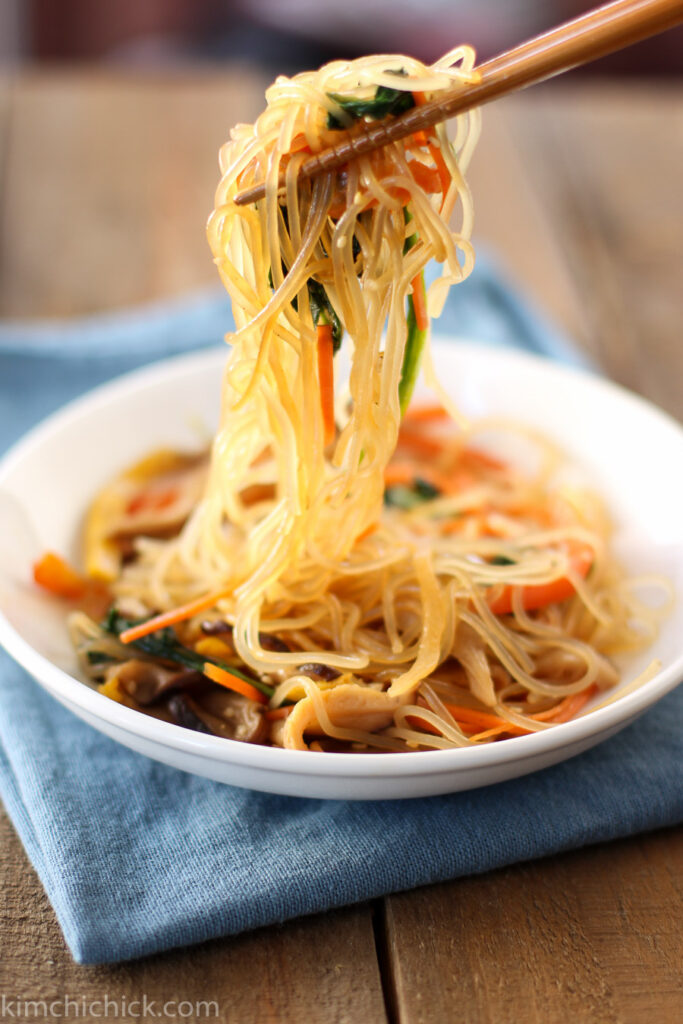
Japchae can be served hot or cold, but I definitely prefer mine hot. Sometimes I mix it into warm rice with a dash of soy sauce and sesame oil, or I eat it as is with a side of my favorite Quick Cucumber Kimchi! It makes a great snack or appetizer, and I am always glad to see it in my fridge (you can keep any leftovers in the refrigerator for up to one week).